

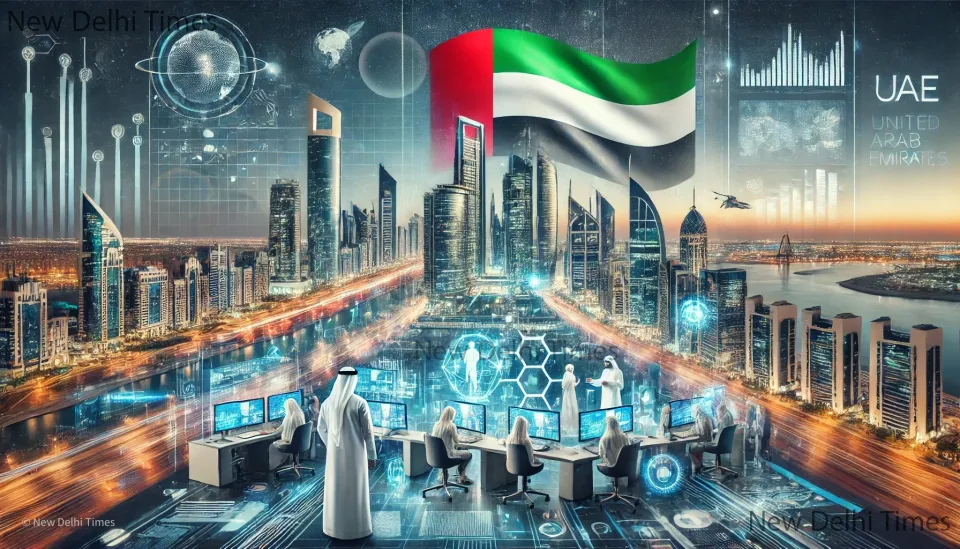
Amid global geopolitical tensions and supply chain disruptions, the United Arab Emirates (UAE) has emerged as a resilient powerhouse in international trade. With foreign trade hitting a record AED 5.23 trillion in 2024—a nearly 49% increase from 2021—the UAE continues to assert its status as a critical node in the global trading system, leveraging strategic partnerships, cutting-edge logistics, and forward-thinking economic policies.
This remarkable growth comes at a time when many economies are struggling with the aftermath of inflationary pressures, disruptions in critical maritime routes such as the Red Sea, and trade realignments caused by shifting political alliances. In contrast, the UAE’s trade performance offers a case study in economic resilience and innovation.
Strategic Geography and Logistics
One of the UAE’s enduring strengths is its strategic location at the crossroads of Asia, Europe, and Africa. Home to some of the busiest and most advanced ports and airports in the world, including Jebel Ali Port and Dubai International Airport, the UAE has consistently invested in upgrading its infrastructure.
In 2024, this investment paid off. The development of new multimodal trade routes—especially through enhanced connectivity to Pakistan, Afghanistan, and Central Asian markets—has significantly reduced transit times and costs for importers and exporters. For instance, goods shipped from UAE-linked Karachi ports can now reach Uzbekistan in just 10 days, down from nearly 20 days a few years ago.
“Efficient logistics is not just an operational advantage; it’s a strategic necessity,” said Mariam Al Kaabi, Director of International Trade at Dubai Chambers. “By creating faster, reliable trade corridors, we not only boost our own exports but also become the preferred gateway for regional trade.”
CEPA: A Game-Changer for UAE Trade Diplomacy
At the heart of the UAE’s trade success lies the Comprehensive Economic Partnership Agreement (CEPA) program. Launched in 2021, CEPAs are bilateral trade agreements that eliminate or reduce tariffs, enhance market access, and promote investment across sectors.
To date, the UAE has signed 24 CEPAs with countries including India, Indonesia, Türkiye, and Georgia, covering a combined market of over 2.5 billion people. These agreements have expanded the UAE’s export base beyond hydrocarbons, particularly in sectors such as clean energy, financial services, agri-tech, logistics, and advanced manufacturing.
“The UAE’s CEPA strategy is about future-proofing our economy,” said His Excellency Dr. Thani bin Ahmed Al Zeyoudi, Minister of State for Foreign Trade. “We’re positioning the country as a global hub for innovation, sustainability, and diversified growth.”
Indeed, non-oil foreign trade in the UAE now accounts for a majority share of total trade, with non-oil exports growing by 16% year-on-year in 2024. Key export products include aluminum, gold, polymers, electrical machinery, and foodstuffs.
Navigating Global Risks
Despite its successes, the UAE has not been immune to the broader geopolitical risks shaping global trade. Conflicts in Eastern Europe and the Middle East have disrupted traditional supply chains and increased transportation costs. Additionally, rising protectionism in parts of the West and trade realignments between major powers have created uncertainty for many export-driven economies.
The UAE, however, has proactively addressed these risks by diversifying its trade partners and investing in digital trade solutions. Through its “Trade Tech” initiative, the country is digitizing customs, logistics, and cross-border documentation to make trade more transparent and resilient.
“We’ve invested heavily in trade technology to reduce dependence on vulnerable chokepoints,” noted Ayesha Al Mazrouei, an economist at the Emirates Policy Center. “Blockchain-enabled cargo tracking, AI-driven customs clearance, and automated compliance systems are allowing UAE traders to adapt faster than many of their global peers.”
BRICS Membership and the Shift Toward the Global South
In a strategic geopolitical move, the UAE officially joined the BRICS group of emerging economies in 2024, aligning itself with countries such as China, India, Russia, and Brazil. This shift reflects the UAE’s desire to deepen South-South cooperation and reduce reliance on traditional Western markets.
Already, trade with BRICS nations has surged, especially in energy, industrial goods, and digital services. China remains one of the UAE’s top trade partners, and bilateral trade with India crossed USD 100 billion in 2024 following the implementation of their CEPA.
“BRICS membership enhances the UAE’s influence in global trade governance,” explained Professor Hassan Jaber, an international relations expert at Zayed University. “It also opens doors to new financial mechanisms, such as alternative payment systems and investment platforms that bypass traditional Western banking networks.”
Sustainability and the Green Trade Push
In line with its commitment to net-zero emissions by 2050, the UAE is positioning itself as a leader in sustainable trade. The country hosted COP28 in late 2023, reinforcing its climate leadership and pledging to become a hub for green energy and clean technology exports.
As part of this strategy, the UAE is expanding its exports of solar technologies, green hydrogen, and sustainable building materials. Trade agreements now increasingly include clauses on environmental compliance and carbon border adjustments.
“We envision a trade future that is not only profitable but also responsible,” said Dr. Noura Al Suwaidi, Director of the UAE Green Trade Council. “We’re working with partners to decarbonize supply chains and promote circular economy models.”
Future Outlook
Looking ahead, the UAE has set ambitious targets: doubling GDP to AED 3 trillion by 2031, increasing foreign trade to AED 4 trillion, and growing non-oil exports to AED 800 billion. Achieving these goals will require continued innovation, economic diplomacy, and investment in human capital.
Several new CEPAs are under negotiation with countries in Africa, Central Asia, and Latin America, while trade promotion offices in emerging markets are helping UAE companies expand globally. Initiatives such as the Abu Dhabi Industrial Strategy and Dubai Economic Agenda (D33) are also designed to boost local manufacturing and tech exports.
“The UAE is not just reacting to global change—it is helping to shape it,” said international trade analyst Elena Haddad. “Its model of proactive engagement, digital transformation, and economic diversification could serve as a blueprint for other nations navigating an increasingly fragmented world.”
Conclusion
As global trade continues to face volatility and reconfiguration, the UAE’s success story provides a rare example of agility, resilience, and vision. By anchoring its strategy in diplomacy, innovation, and diversification, the nation is redefining what it means to thrive in the new global economy.

