

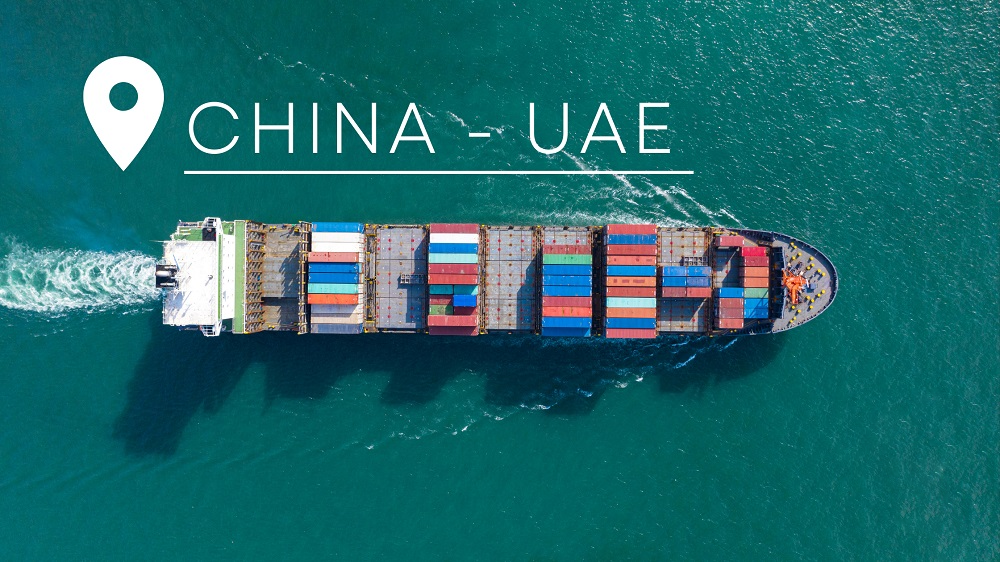
As global trade realigns amid shifting political alliances and economic reforms, the relationship between China and the United Arab Emirates (UAE) stands out as one of the most strategically significant. In recent years, the two nations have rapidly deepened their economic ties, with bilateral trade exceeding $100 billion annually. Central to this momentum are a select group of corporations—both Chinese and Emirati—that are leading the charge in import-export activities.
Here’s a look at the Top 10 companies powering China–UAE trade, based on their economic impact, trade volume, strategic influence, and ongoing initiatives as of 2025.
1. COSCO Shipping (China)
Sector: Maritime Logistics
Role: Operates terminals at Khalifa Port, Abu Dhabi
COSCO Shipping, one of the world’s largest shipping companies, plays a crucial role in connecting China’s manufacturing hubs to the Middle East. Through its joint venture at Khalifa Port Container Terminal (KPCT), COSCO has established Abu Dhabi as a key re-export hub for Chinese goods destined for Africa and Europe.
2. DP World (UAE)
Sector: Ports and Logistics
Role: Trade facilitator for Chinese cargo via Jebel Ali Port
Dubai-based DP World operates ports and logistics facilities across six continents. With strategic port infrastructure at Jebel Ali Port and free zones like JAFZA, DP World facilitates the smooth transit of Chinese electronics, machinery, and textiles into the Gulf region and beyond.
3. Huawei Technologies (China)
Sector: Technology and Telecommunications
Role: Major exporter to the UAE and regional ICT partner
Huawei is a dominant player in the UAE’s digital transformation, supplying 5G infrastructure, smart city solutions, and consumer electronics. It collaborates closely with Emirati telecom companies like Etisalat and du, making it one of the top Chinese exporters to the UAE.
4. Emirates Global Aluminium (UAE)
Sector: Industrial Metals
Role: Exporter to China of bauxite and aluminium products
EGA, one of the world’s largest aluminium producers, is a key exporter to China, supplying raw materials for China’s massive manufacturing industry. The company’s upstream operations in Guinea and downstream supply chains into China make it a bridge between continents.
5. Alibaba Group (China)
Sector: E-Commerce and Digital Trade
Role: Driving cross-border e-commerce with UAE businesses
Alibaba, through AliExpress and Cainiao Logistics, has boosted e-commerce flows between China and the UAE. In 2024, the company expanded its Middle East logistics hub in Dubai, targeting faster last-mile delivery to Gulf customers and supporting thousands of SME exporters in both nations.
6. Borouge (UAE)
Sector: Petrochemicals
Role: Exporter of polyolefins to China
Borouge, a joint venture between ADNOC and Borealis, is one of the region’s largest exporters of polyolefins—used in plastic manufacturing. China, being the world’s largest consumer of these materials, is a major market for Borouge, with volumes increasing under CEPA trade terms.
7. China National Petroleum Corporation (CNPC)
Sector: Oil & Gas
Role: Key importer of UAE crude oil
CNPC, China’s state-owned oil giant, maintains strategic oil import agreements with ADNOC. The UAE supplies a steady volume of crude to China’s growing refineries, while CNPC also invests in upstream energy partnerships in Abu Dhabi, reinforcing energy ties.
8. LuLu Group International (UAE)
Sector: Retail and FMCG Imports
Role: Imports and distributes Chinese goods in GCC markets
Though UAE-based, LuLu Group is one of the largest importers of Chinese consumer goods in the Middle East. With sourcing offices in Yiwu and Guangzhou, LuLu imports electronics, homeware, garments, and food products for distribution across its extensive retail network.
9. Sinochem Group (China)
Sector: Chemicals and Agriculture
Role: Exports industrial chemicals and fertilizers to the UAE
Sinochem, one of China’s biggest state-owned trading enterprises, exports a significant volume of industrial chemicals and fertilizers to the UAE. It supports the region’s agricultural and manufacturing sectors and is increasingly involved in sustainability-focused trade partnerships.
10. Etihad Rail – China State Construction Engineering Corp. (Joint Project)
Sector: Infrastructure and Engineering
Role: Engineering collaboration with major export implications
Etihad Rail’s major infrastructure projects are being partly built by China State Construction Engineering Corporation (CSCEC). This collaboration underscores growing cooperation in construction and transport, paving the way for smoother regional trade and export logistics.
A Strategic Axis for Global Trade
The China-UAE trade corridor is not just growing in volume—it’s evolving in scope. Thanks to initiatives like the Comprehensive Economic Partnership Agreement (CEPA) and China’s Belt and Road Initiative (BRI), both nations are working toward streamlined customs procedures, enhanced logistics, and digital trade infrastructure.
“China and the UAE are setting new standards for cross-border economic cooperation,” said Dr. Thani Al Zeyoudi, UAE Minister of State for Foreign Trade. “Our partnership is driven by shared ambition, strategic diversification, and a commitment to innovation.”
With bilateral trade projected to reach $200 billion by 2030, these ten companies are likely to remain central players—not just in bilateral commerce, but in defining the next era of global trade.

